
Commercial Drain & Grease Trap Cleaning
Planned cleaning of commercial drain lines and grease traps to remove accumulated grease, sludge and deposits in kitchens and high-use facilities, with service structured around site access and operating requirements.
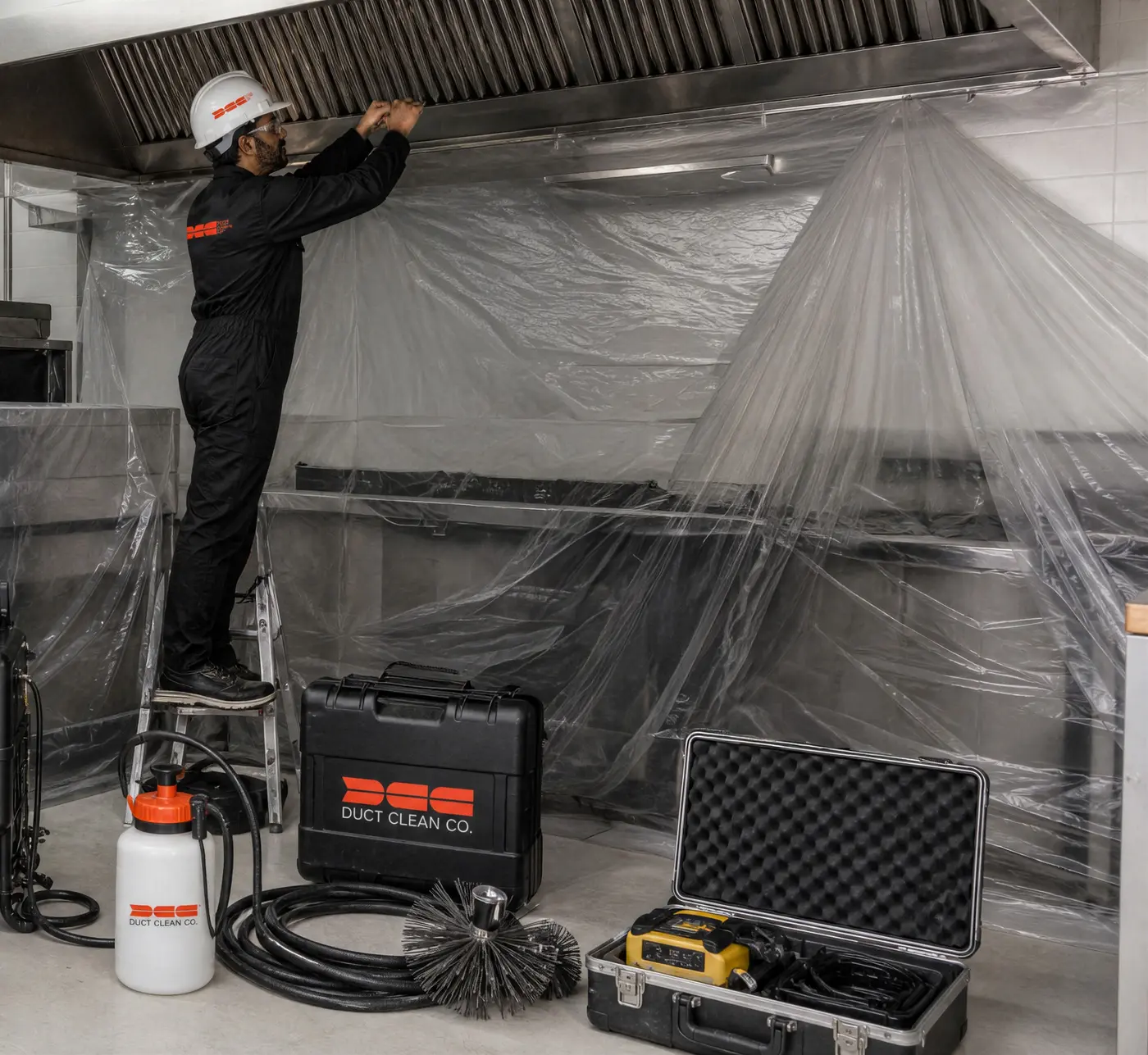
Survey the access. Select the method. Plan the work.
Real site conditions determine the equipment, protection, work zones and evidence required for a responsible specialist service.
Remove accessible grease, sludge and deposits from the agreed drain and grease trap scope while recording observed restrictions and recommended follow-up actions.
The scope begins with the system condition, configuration and operational requirements. The survey defines what can be accessed, which method is suitable and how completion will be recorded.
When to arrange an inspection
- Recurring slow drainage or blockages
- Visible grease or sludge accumulation
- Persistent odours around drain or trap areas
- No recent cleaning or condition record
What may be covered and what you can receive.
System components
- Accessible commercial drain lines within the approved scope
- Grease trap chambers and accessible components
- Controlled removal and collection of accumulated deposits
- Condition observations and access limitations
Service records
- Assessment and completion record
- Visual evidence from accessible areas
- Service confirmation
- Recorded limitations and recommended next steps
The method must suit the actual system.
Drain and grease trap cleaning must be planned around the actual system, access, waste handling requirements and facility operations. Cleaning does not replace repairs to damaged pipework, traps or connected equipment.
Read about standards and documentation →Execution sequence
- Assess
- Remove
- Clean
Important points before approval.
What does a commercial drain and grease trap survey review?+
The survey reviews accessible drain routes, grease and sludge accumulation, trap access, operating constraints and the appropriate cleaning and waste handling requirement.
Can the work be planned outside kitchen operating hours?+
Yes. The final work window should allow access, protection, removal, cleaning, restoration and verification before operations resume.
Will cleaning resolve every recurring drainage issue?+
Not always. Damaged pipework, poor gradients, equipment faults or inaccessible restrictions may require separate investigation or repair.